
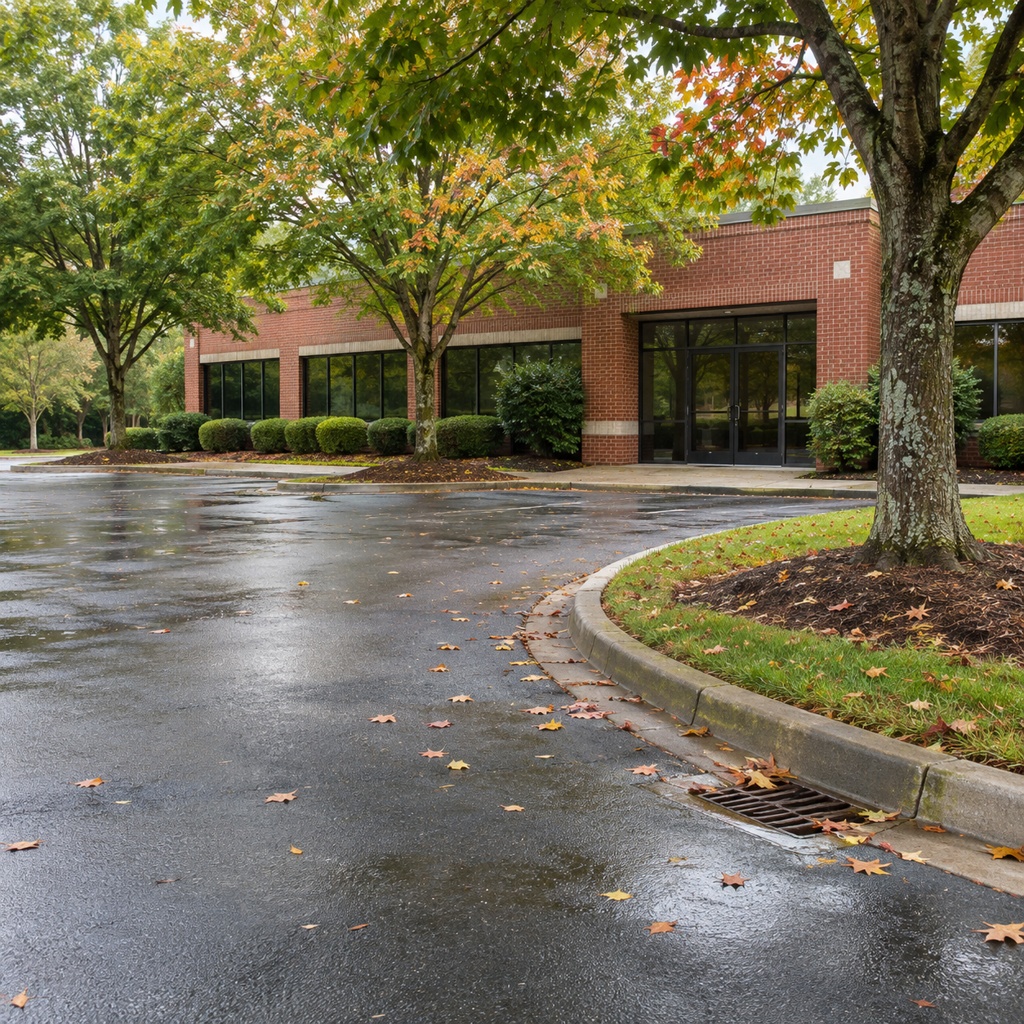

A useful fall sweeping plan begins with a clear look at the whole property, not just the most visible parking rows. For the Carolinas commercial properties with visitor parking, storefront access, and service areas, early fall is an opportunity to identify where litter, organic debris, sediment, and small maintenance concerns gather. it is a good point to set the order of work before leaf drop, changing weather, and seasonal traffic make neglected collection points more visible. The goal is not to promise that one visit solves every condition; it is to create a repeatable route that matches the property’s layout, use, and weather exposure.
Put the route ahead of the calendar
The strongest fall sweeping program starts by mapping the pavement rather than choosing a schedule in isolation. A property that receives frequent deliveries may need different attention from a quiet office campus. A retail entrance can collect debris differently from a rear loading area, even when both are only a few hundred feet apart. Walk the site at a normal operating time and note where material is carried by tires, wind, landscaping activity, or foot traffic. That first walk creates a practical baseline for future service conversations.
Start where visitors notice the site first
For many managers, the right opening pass for fall sweeping is the arrival sequence. Review main entrances, curb gutters, crosswalk approaches, landscaped islands, drain inlets, service lanes, and loading areas. Look for material gathering at the curb, around wheel stops, beside landscape beds, and at the edge of pavement markings. This is also the time to separate ordinary loose debris from issues that may require a different maintenance response, such as damaged curbing, a failed sign, a spill, or a drainage structure that needs inspection. A clear scope helps the maintenance team act on the right issue instead of treating every observation as the same task.
Follow debris toward the collection points
Pavement does not hold debris in one place. During a fall sweeping review, use the site’s slope and gutter lines as a guide. Start with the visible source areas, then follow the likely travel path to the curb and inlet. The U.S. Environmental Protection Agency notes that runoff from paved areas can pick up dirt, trash, and other pollutants; its EPA parking-lot stormwater guidance is a helpful reminder that a parking area is part of a broader drainage path. That does not replace site-specific requirements, but it supports the habit of keeping loose debris away from collection points.
Make the route specific to the property
Avoid a generic loop that treats every row of pavement alike. A workable fall sweeping route for this type of site might begin at the first impression zone, trace the curb and pedestrian paths to their drains, then create a separate route for the service side of the property. Record the places that need closer attention, the places that only need routine review, and the areas where work should be coordinated with another vendor or property contact. This simple separation makes the plan easier to explain to a facilities team and easier to revise when tenant patterns, landscaping, construction, or weather conditions change.
Use a short inspection checklist
- Is debris collecting at curbs, gutters, or the edge of landscape beds?
- Are entrance walks, accessible routes, and crosswalk approaches clear and easy to see?
- Do the parking rows and driving lanes show a different debris pattern from the service side?
- Are drain inlets visibly free of loose litter and organic material at the surface?
- Does any issue need a maintenance, safety, drainage, or waste-management follow-up beyond routine cleanup?
This list keeps fall sweeping focused on observable conditions. It also gives a manager a way to document what changed between visits without relying on memory alone. Photos, a simple property map, and notes about recurring collection points can make future decisions more consistent.
Coordinate the work around site activity
Timing is a major part of fall sweeping, especially at properties that have tenant hours, delivery windows, school traffic, medical appointments, or shared access drives. Identify periods when the route can be completed with less interruption, but do not assume that an empty-looking lot has no operational constraints. Communicate with the property contact about gates, loading schedules, special events, temporary construction, and areas that should be kept accessible. A good schedule protects both the visitor experience and the practical ability to reach curb-side areas.
Keep the scope realistic
Routine pavement cleanup is not the same as a drainage repair, spill response, landscape project, or pavement reconstruction plan. A sound fall sweeping scope should state what is being reviewed and what gets escalated. For example, a visible surface buildup at an inlet can be noted for removal, while a damaged grate, standing water that persists after normal conditions, or suspected structural issue should be referred to the appropriate property or public-works contact. This distinction helps prevent a routine visit from becoming a substitute for specialized work.
Review the plan after weather and seasonal changes
Conditions change throughout the year. After a heavy rain, landscape trimming, a busy event, or a shift in tenant use, revisit the places identified in the first walkthrough. This is where fall sweeping becomes a management routine rather than a one-time appearance task. If the same curb, loading lane, or entrance edge repeatedly accumulates material, adjust the order of service or the inspection frequency. The useful question is not whether the property looks exactly the same every week; it is whether the plan responds to the way the property actually functions.
Build a clear next step
For the Carolinas managers, the practical next step is to list the priority areas, choose a service window, and confirm who receives follow-up notes when an issue falls outside routine work. fall sweeping is most effective when it is connected to those decisions. A documented fall sweeping plan gives the property team a useful starting point for each follow-up review. If you would like help reviewing a commercial property’s pavement routes and routine service priorities, request a quote and share the areas that need the closest attention.