
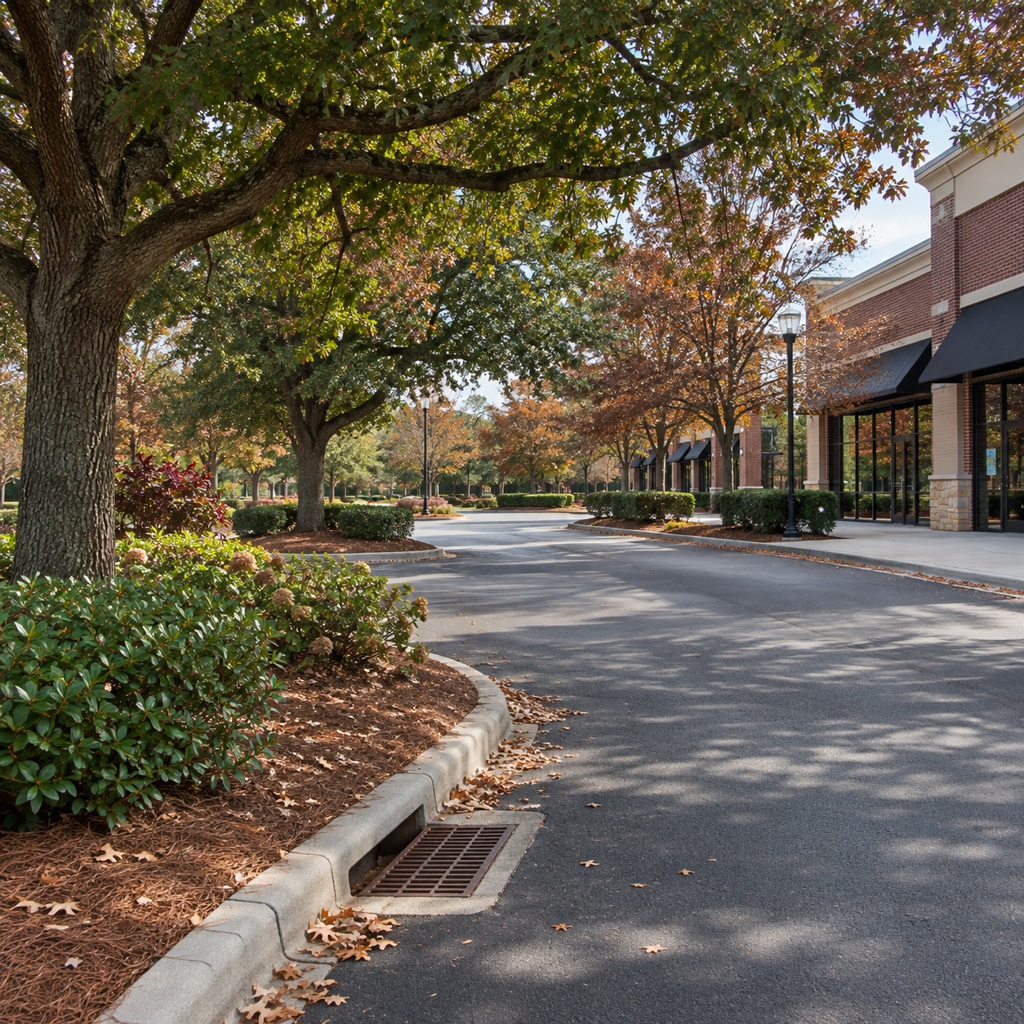

Leaf sweeping across several Carolina commercial properties should start with the differences between sites. A heavily landscaped office campus, a shopping center with open parking, and a small service property can collect leaves in different places and at different rates. A portfolio-wide plan becomes more useful when it sets consistent priorities without forcing identical work orders.
For an owner or regional manager, the challenge is turning local observations into service requests that can be compared and reviewed. Leaf sweeping should identify where material collects, what access is available, and who is responsible for the surrounding landscaping. That information gives each property a practical scope within the wider maintenance plan.
Group properties by conditions, not addresses alone
Ask each site contact for current photographs of landscaped edges, entrance routes, rear service areas, and visible drains. Use the same categories at every location so the information is comparable. A few useful images are better than a long report saying only that the site needs cleanup.
For leaf sweeping, note tree cover, the extent of accumulation, and any unusual debris mixed into it. Separate a property with a few scattered leaves from one with deep piles or branches. These conditions can call for different handling and should not be hidden inside a standard portfolio description.
Include access restrictions in the comparison. Overnight parking, shared loading areas, gates, and tenant-controlled spaces can determine whether a planned visit is workable. A site that needs more coordination should be identified before equipment is scheduled.
Give leaf sweeping a clear priority order
Define the areas each manager should inspect first. These might include pedestrian connections, accessible curb lines, service drives, and surface-drain approaches. The exact order should suit the property, but the reporting method can remain consistent across the portfolio.
Charlotte advises keeping leaves and yard debris out of streets and storm drains. That collection principle is useful for Carolina property planning. It does not establish a single disposal program or legal requirement for every site, so local arrangements still need confirmation.
Leaf sweeping should collect material rather than transfer it to a drain or adjoining parcel. If water remains after visible debris is removed, report it for separate assessment. Surface cleaning is not confirmation that underground drainage is functioning properly.
Connect the landscape and pavement contracts
At each site, identify who handles planted areas, sidewalks, and the final collection of moved leaves. A landscape visit scheduled immediately after pavement cleaning can create avoidable rework if the sequence is not discussed. Give both providers the information needed to coordinate.
Leaf sweeping requests should identify bulky branches, dumped items, or unusual material before the visit. Those tasks may require separate equipment or authorization. SouthCo offers power sweeping and commercial maintenance services, but the scope still needs to name the work being requested.
A hypothetical portfolio might contain one wooded office property and one open retail lot. The first could need targeted curb attention after landscape work, while the second needs a broader litter and pavement visit. Consistent oversight does not require identical tasks at both addresses.
Standardize the information in every request
Use a short request form for leaf sweeping. Include the site address, contact, marked areas, current photos, available service window, and known restrictions. Ask the provider to identify assumptions about access and the handling of collected material.
The form should also state who can approve additional work. A crew should not have to guess whether a tenant representative can authorize bulk removal or a return visit. Clear authority helps a portfolio manager keep both the work and the resulting charges understandable.
Avoid choosing frequency only from property size. Ask how the interval relates to observed accumulation and operating needs. A small tree-lined section may deserve more attention than a much larger open area with little leaf material.
Confirm disposal and reporting at each site
Collected pavement debris can contain sediment and litter along with leaves. Do not label every load as clean yard waste or assume one receiving facility accepts material from every location. Confirm loading, transport, and disposal responsibilities with the provider.
For leaf sweeping, ask how inaccessible areas will be reported. A marked photograph or brief service note can show which rows were blocked, which gates were closed, and which material needed separate handling. That information is especially useful when the person paying the invoice is not on site.
Make the reporting proportionate to the job. The purpose is a reliable record, not an elaborate document that nobody uses. A consistent format helps managers spot repeated access problems or recurring accumulation across visits.
Review completion against the local scope
After leaf sweeping, each site contact should revisit the agreed inspection points. Review curb edges, entrance areas, and drain approaches included in that property’s work order. Record any limitations before the details are forgotten.
A portfolio review can compare:
- Work completed at the named priority areas.
- Access restrictions affecting the visit.
- Separate debris or drainage needs reported.
- Collection responsibilities fulfilled.
- Conditions supporting a change to the next service interval.
Newly fallen leaves are different from material left in an unavailable row. Use the original request and completion record to distinguish them. Adjust the next leaf sweeping decision from those observations instead of assuming every location needs more frequent service.
Build a site-specific plan with SouthCo
SouthCo provides commercial property services across the Carolinas. A regional request should include the local details that make each address different: tree cover, tenant activity, landscape responsibilities, and access limits.
To discuss leaf sweeping across one property or several, contact SouthCo. Bring a consistent set of site photographs and priorities so the team can discuss practical scopes, service windows, and reporting for the properties you manage.